
Unique and long lasting cooling technology and performance.


Most don’t realise dogs need cooling
Starting at around 25°C / 77°F temperatures can become challenging for many dogs. Sensitivity varies depending on breed, size, and activity level.
Cooling gear helps your dog stay comfortable and healthy in warm and demanding conditions.

NEW: Dog heat risk calculator
Find out if it’s already too warm for your dog.
- Temperature
Current local temperature - Humidity
Current local humidity level - Breed-based risk
Personalized risk estimation based on your dog’s breed

|
Others
|
|
|---|---|---|
|
Dog fur stays dry
|
|
|
|
Avoids fur irritation and eczema
|
|
|
|
One of the longest cooling performance (We tested!)
|
|
|
|
Suitable for many different climates and environments.
|
|
|
Our technologies
-

DRY – High performance & long lasting.
Discover DRYUse tap water to activate, and enjoy up to 72 hours of cooling without your dog's fur becoming wet.
Can reach up to 15°C / 27°F below ambient temperature
-

PCM – Precision cooling performance in any climate
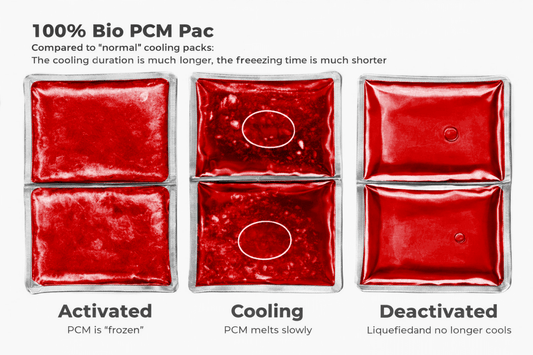
Discover PCMAdd PCM (Phase changing modules) pacs to your vest and enjoy a stable temperature in all climates.
Keeps a constant temperature of 21°C / 70°F no matter the climate


Why does a dog need cooling?
Dogs are more sensitive to heat than humans — especially as temperatures rise. Their natural cooling system is limited and can quickly reach its limits in warm conditions.
- No sweating: dogs cannot regulate heat through sweat like humans
- Panting-based cooling: heat is managed mainly through breathing and the nose
- Up to 200–300 breaths/min: rapid panting increases physical strain
- Limited efficiency: cooling becomes less effective in high heat
- Higher heat stress risk: one of the most underestimated conditions and preventable condition for dogs.
All our products
-
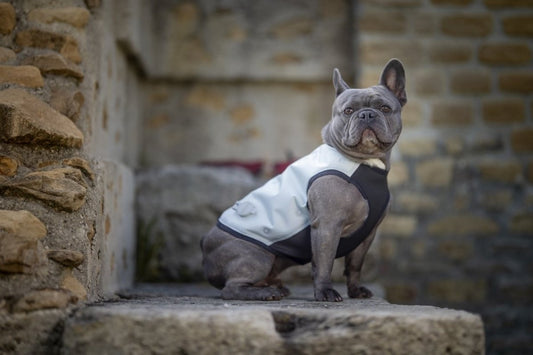
DRY advanced cooling vest for dogs
Regular price From $100.00 USDRegular price$0.00 USDSale price From $100.00 USD -
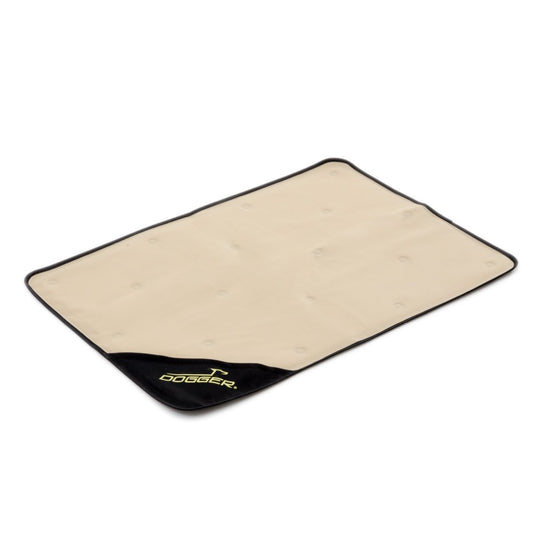
DRY cooling mat for dogs and pets
Regular price From $37.00 USDRegular price$0.00 USDSale price From $37.00 USD -
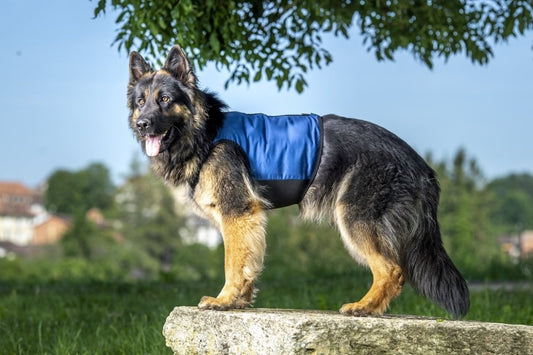
PCM constant temperature cooling vest
Regular price From $50.00 USDRegular price -
PCM refill cooling pac, 100% bio
Regular price $18.00 USDRegular price





Heat Stress in Dogs
In warm temperatures, dogs may breathe up to 300 times per minute to regulate their body temperature. They rely completely on panting and nasal evaporation for cooling.
As heat exposure increases:
- Body temperature rises
- Breathing becomes rapid and intense
- Heart rate increases
- The cardiovascular system is placed under strain
- Natural cooling through panting becomes insufficient
If nasal airways are restricted, physical activity is high, or ambient temperatures are excessive, a dog’s natural thermoregulation can fail.
This is when heat stress in dogs occurs — a serious and potentially life-threatening condition that requires prevention and proper temperature management.